Focused arrival windows
Useful updates and clear arrival timing.
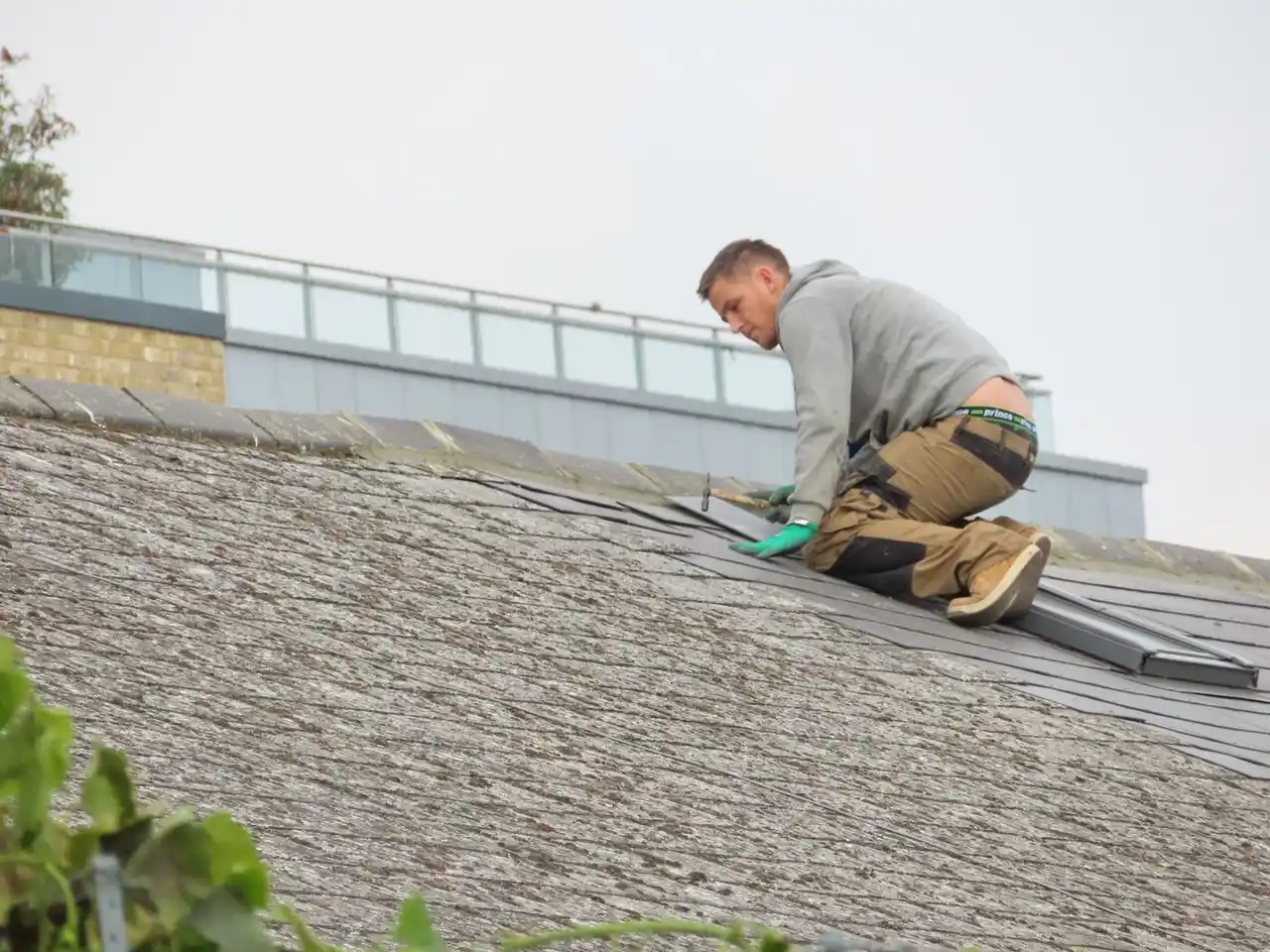
EPDM Roof Leak Repair in Conroe starts with finding the actual entry point, not guessing at it. We run moisture meters and infrared scans across your flat roof, trace the water back to the failed seam or boot, and fix it the same day when the schedule allows. If your ceiling has a brown ring spreading after the last storm, call (936) 304-3062 and we will get a tech on the roof.
Useful updates and clear arrival timing.
Review the approach and price before deciding.
Equipped vehicles and respectful cleanup.
Neighbors serving neighbors with follow-through.
Every EPDM Roof Leak Repair in Conroe visit covers the diagnostic work and the membrane repair itself. If we find a second issue while we are up there, we show you the photo and price it before touching it.
We walk the membrane, check every seam, boot, and termination, and meter the suspect areas. You get a written summary of what failed and why, not just a verbal description.
A moisture meter and infrared thermal imaging camera map the wet zones under the membrane so the repair targets the actual leak path rather than the nearest visible stain.
Failed laps get cut back, cleaned, and re-spliced with splice adhesive and butyl tape. Cracked pipe boots are replaced with new EPDM-compatible units and spliced into the field.
We flood-test the repaired area with a water hose test kit before we leave. If it still leaks, we have not finished, and you do not pay for a second visit to prove it.
Before and after photos of the repair go to you by text or email. Useful for insurance claims, HOA records, or just knowing what is on your roof.
The patch and seal carry a written workmanship warranty. Terms go on the invoice, and if the same repair fails inside the term, we return at no charge.
Share what is happening and receive a clear next step from the local team.
EPDM Roof Leak Repair in Conroe is a flat-roof repair service that locates and seals failures in rubber membrane roofing before water reaches your decking and insulation. EPDM is a single-ply synthetic rubber, usually black, glued or mechanically fastened over low-slope roofs on garages, additions, and commercial buildings. When it fails, it fails at the seams, the pipe boots, and the perimeter terminations. We clean the membrane, cut back the failed lap, apply splice adhesive and butyl tape, and roll the patch flat so it cures into one continuous sheet.
Conroe summers push membrane roofs hard. Surface temps on a black EPDM sheet hit 160 to 180 degrees by early afternoon in July and August, and that heat cycling pulls at every seam. Add the wind-driven rain from Gulf systems and the occasional hail band, and a ten-year-old flat roof starts showing its weak points. Homeowners in 77301 and 77303 call us most often after a ceiling water stain appears in a back bedroom or garage. We handle Conroe EPDM roof leak repair service calls seven days a week, and we can usually get eyes on the roof within 24 hours.

You describe the leak, the roof type, and where the stain is showing. We ask about roof age and any recent storm. This takes about ten minutes and lets us load the right membrane and adhesive before we roll.
A tech walks the membrane with a moisture meter and an infrared thermal imaging camera to map wet zones. We photograph every suspect seam, boot, and termination. Expect 45 to 90 minutes on a typical residential flat roof.
Water rarely enters where the stain appears. We trace it back, often 10 to 20 feet away, using the moisture readings and a water hose test kit on the suspect area. You get a plain explanation of what failed and what the fix costs before we start.
We cut back the failed lap, clean with splice cleaner, apply bonding adhesive and butyl tape, and roll the patch with a hand roller. Pipe boots get replaced, not smeared with roof cement. A standard seam patch takes one to two hours.
We flood-test the repaired area, re-meter the ceiling side if accessible, and show you photos of the finished work. You get the warranty terms in writing and a short list of what to watch over the next rainy season.
Reads moisture content in insulation and decking so we know how far the water has traveled before we cut into the membrane.
Maps temperature differences to reveal wet zones under the EPDM sheet without tearing the roof open.
Flood-tests the repaired area to confirm the splice and boots are watertight before we leave the property.
Documents larger commercial roofs and hard-to-reach sections quickly and safely, with photos for the customer and insurance file.
Keeps the crew safe on steep access and low-slope edges, and protects your gutters and siding from ladder damage.
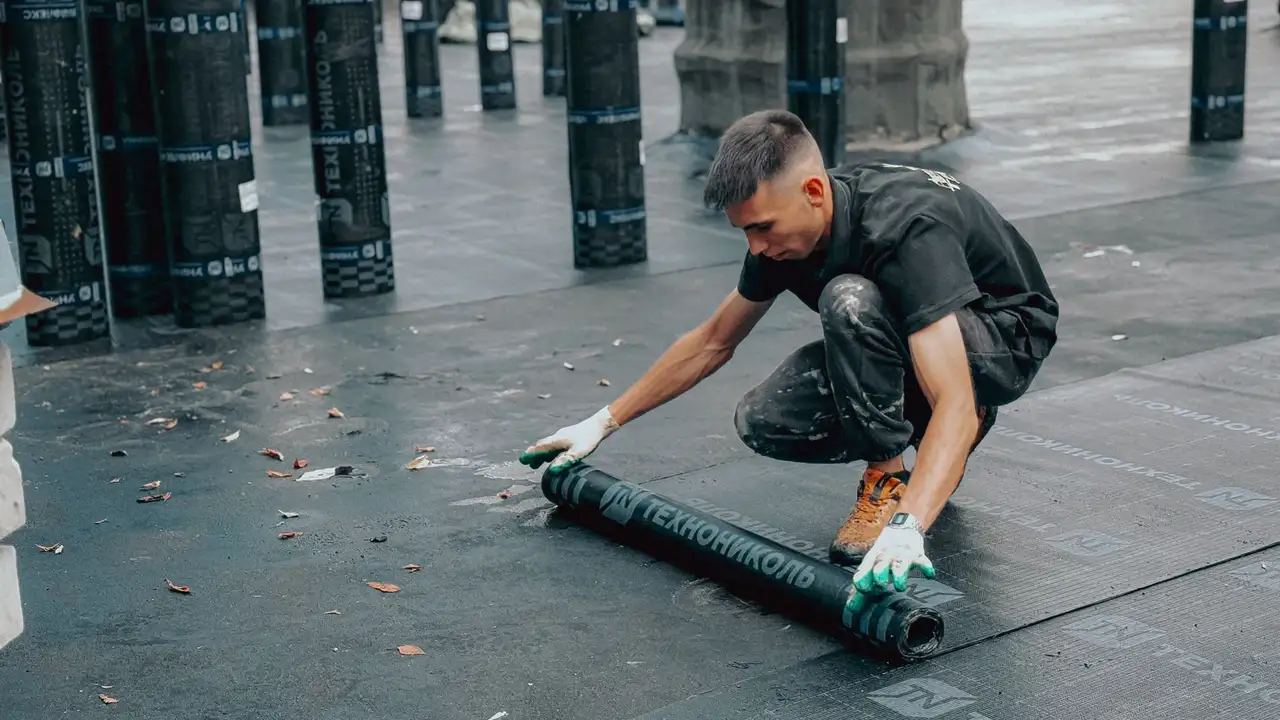
Applies splice adhesive and rolls the patch flat so the new membrane bonds into one continuous sheet.
The standard method for EPDM seam repair. We cut back the failed lap, clean it with splice cleaner, apply bonding adhesive, set butyl tape, and roll the patch flat. This is the method Firestone and Carlisle SynTec specify for membrane repairs.
We scan the roof with a thermal camera in the morning when temperature differentials are sharpest. Wet insulation shows as a cooler or warmer zone, which tells us where to focus the repair instead of patching every seam.
Perimeter and penetration terminations follow NRCA detail standards, with proper counterflashing and membrane run-up so wind-driven rain cannot get behind the edge.
Every repair gets a controlled water test on the finished area. If water still gets through, the job is not done, and we keep working until it passes.
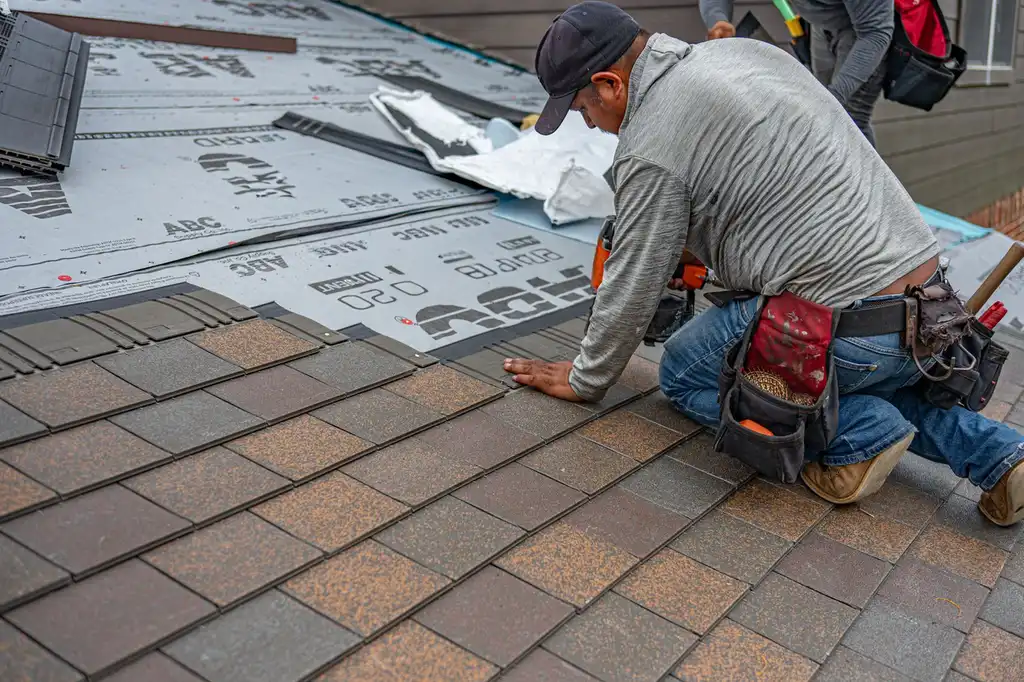
We inspect the membrane above the stain, meter the wet zone, and trace the entry point, which is often a seam 10 to 20 feet away. The repair is spliced and water-tested the same visit. The stain stops growing, the ceiling dries, and you have photos and a warranty for the record.
We tarp the area the same day to stop the interior damage, then return when the roof dries to make the permanent EPDM repair with minimal disruption to the tenant. Inventory is protected, the tenant stays open, and the roof is repaired within 48 hours of the storm passing.
We replace the boot with a new EPDM-compatible unit, splice it into the membrane, and water-test it. This is a one-to-two-hour job and we carry the common sizes on the truck. The vent penetration is sealed, and the ceiling below stays dry through the next storm.
We inspect the full membrane, remove failed cement patches, re-splice the seams properly, and provide photo documentation of each repair for the building file. The roof passes inspection with a clean repair record, and the manager has documentation for insurance and ownership.
Conroe sits in Montgomery County with a climate that punishes flat roofs: summer surface temperatures on black EPDM hit 160 to 180 degrees, and Gulf moisture means heavy, wind-driven rain bands from spring through fall. Older commercial strips and garage additions around downtown Conroe and along Frazier Street have membrane roofs reaching the end of their seam life. Newer construction in 77384 and 77305 often has EPDM over garages and porch sections tied into shingle fields, and those transitions are where we find the most leaks. We schedule inspections in the morning when infrared readings are sharpest, and we keep tarping material on the truck for the storm-season emergency EPDM roof leak repair Conroe TX calls that come in after a squall line. If you need EPDM roof leak repair in Conroe TX 77301, we know the roof types and the permit desk.
Older commercial buildings with flat EPDM roofs that have been patched repeatedly; seam repair and full re-splice are common calls here.
Residential garages and porch additions with low-slope EPDM sections tied into shingle roofs; transition flashing is the usual leak point.
Mature homes with flat-roof additions where original EPDM is now 15 to 20 years old and showing seam separation.
Waterfront homes exposed to wind-driven rain off the lake; perimeter terminations and boots take the most abuse.
Mixed commercial and residential flat roofs along the I-45 corridor; storm damage and ponding issues are frequent.
Heat cycling pulls at seams and dries out pipe boots faster than in cooler climates, so repairs need to be spliced, not smeared with cement.
Rain pushed sideways finds perimeter terminations and lifted laps. We check edges and terminations on every inspection, not just the field seams.
Hail bruises the membrane and can crack aged boots. We document hail damage for insurance and repair the punctures before they become leaks.
Standing water for more than 48 hours stresses seams. We identify low spots and advise on drainage so the repair is not undone by the next storm.
A homeowner in 77301 had a spreading brown ring on the garage ceiling and a flat EPDM roof that had been smeared with roof cement twice by a handyman. The moisture meter showed wet insulation 14 feet from the visible stain.
We removed the failed cement, cut back the separated lap, and re-spliced with adhesive and butyl tape. The water test passed on the first try, and the ceiling stayed dry through the next two storms.
Maintenance: Check the repaired seam each spring and after any hail event. Keep the roof clear of debris so water drains instead of ponding on the patch.
A retail strip in The Woodlands had three failed seams and a cracked pipe boot leaking into two tenant spaces. Prior patches were lifting and trapping water against the membrane.
We re-spliced all three seams, replaced the boot, and documented each repair with photos for the property manager. The units stayed dry through two heavy rain events in the following month.
Maintenance: Schedule an annual inspection before storm season and keep the drainage scuppers clear so water does not back up onto the repaired seams.
A Willis homeowner called with water coming into a laundry room during a Friday storm. The roof was too wet for a permanent repair, and the ceiling was at risk.
We tarped the area that afternoon, returned Monday when the membrane dried, replaced the boot, and re-sealed the seam. The repair passed a water test, and the interior stayed dry.
Maintenance: After any tarped emergency, get the permanent repair scheduled within a week. Tarps are temporary and degrade in UV within a few months.
Flat roofs fail in predictable ways, and each one has a correct repair. These are the four we handle most often when homeowners call for affordable EPDM roof leak fixing Conroe Texas.
Lifted laps let water straight into the insulation board, and the wet spot spreads sideways along the deck until the ceiling shows a stain far from the actual failure. We cut back the failed lap, clean with splice cleaner, and re-splice with bonding adhesive and butyl tape. The repair is rolled flat and water-tested before we leave.
Rubber boots dry out and crack within 10 to 15 years in Texas heat. Each cracked boot is a direct path for water into the attic or ceiling cavity. We replace the boot with a new EPDM-compatible unit sized to the pipe, splice it into the membrane, and seal the collar. No roof cement smeared over the old boot.
Standing water for more than 48 hours after rain stresses seams and speeds membrane breakdown. It also hides small failures until they become big ones. We identify the low spot, repair any seam damage it caused, and advise on drainage or tapered insulation if the ponding is structural rather than a one-off.
Roof cement does not bond to EPDM long-term. Old smears crack, trap water, and hide the real failure, which makes the next diagnosis harder and the repair bigger. We remove the failed cement, clean the membrane properly, and install a spliced EPDM patch that bonds to the sheet instead of sitting on top of it.
Our techs work single-ply membrane roofs every week, not once a quarter. That matters because EPDM diagnosis is a different skill from shingle work. We train on seam splicing, termination details, and moisture mapping, and we hold HAAG Certified Inspector credentials for storm-related damage assessment. We carry OSHA 10 and OSHA 30 cards for crew safety on commercial low-slope work, and we follow NRCA detail standards on every termination. When we tell you a seam is failing versus a boot, it comes from hundreds of flat-roof callouts across Montgomery County.
Most residential EPDM repairs in Conroe run $350 to $1,200 in 2026, with a typical seam patch landing near $550. A single pipe boot replacement is usually at the low end; multiple failed seams or wet insulation push it higher. We give you the number after the on-roof inspection, before any work starts.
Roof Leak Repair Conroe Pros fixes EPDM roof leaks across Conroe and Montgomery County. We are a Texas-licensed roofing contractor with flat-roof training on Firestone and Carlisle SynTec systems. Call (936) 304-3062 and we will schedule an inspection, usually within 24 hours.
No. Splice adhesive and butyl tape will not bond to a wet membrane, so a permanent repair waits for a dry surface. In active rain we tarp the area to stop interior damage, then return when the roof dries, usually within 24 to 48 hours. Tarping is a same-day service.
A single seam or boot repair takes one to two hours on the roof. Inspection adds 45 to 90 minutes. Larger commercial sections with multiple failures can run a full day or split across two visits. Most homeowners are back to normal the same day they call.
Not seeing your question? Our local team can help you understand urgency, scheduling and what to expect.
Ask the local team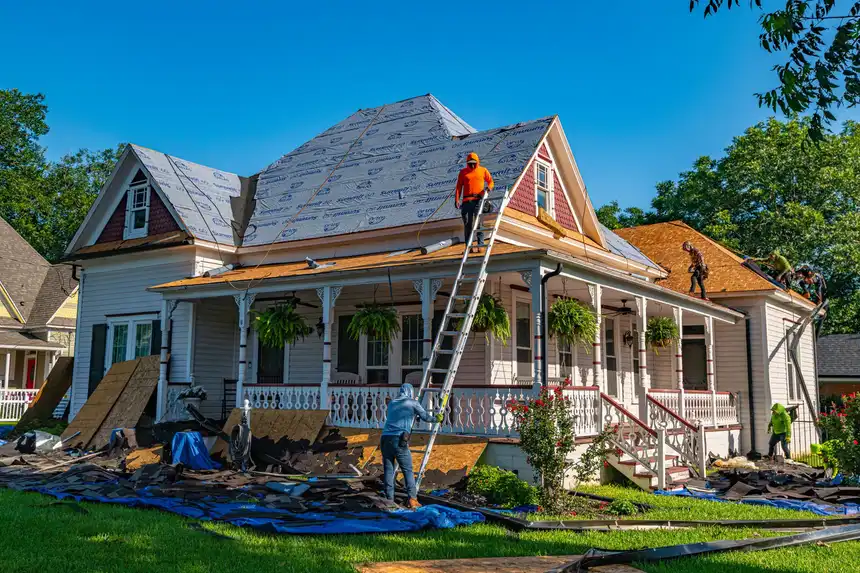
When the leak is not on a flat EPDM section, our general roof leak repair service covers pitched roofs, shingles, and transitions so the whole envelope gets handled by one crew.
View service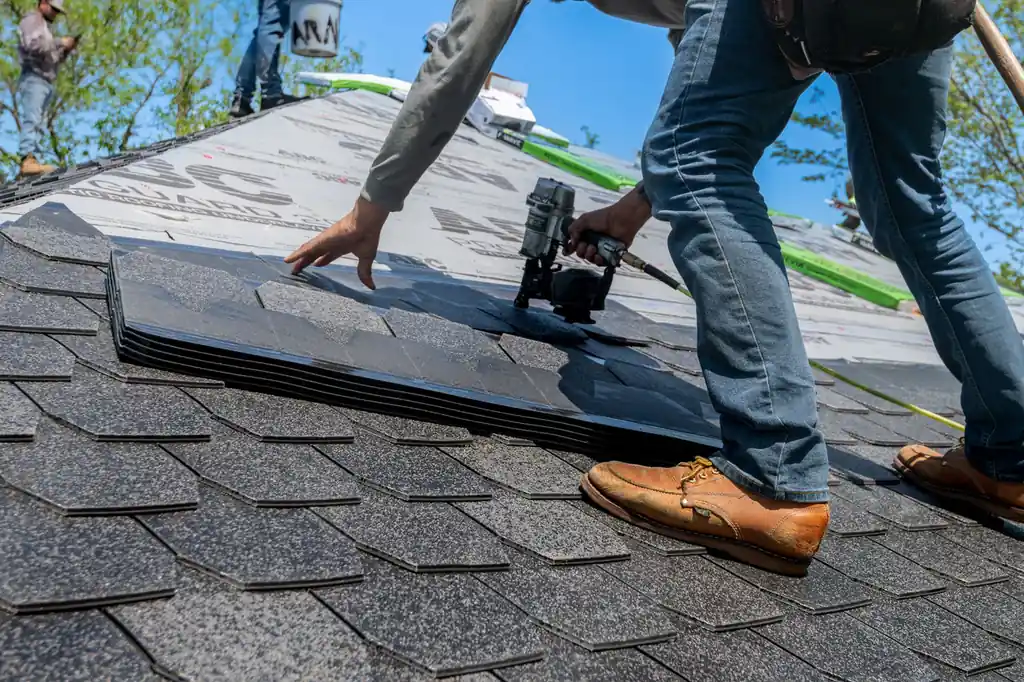
Beyond the leak itself, we handle decking repair, fascia, and soffit damage that water intrusion leaves behind on Conroe homes, so the fix is structural, not cosmetic.
View service
Many Conroe homes have an EPDM flat section tied into an asphalt shingle field. We repair the shingle side and re-flash the transition so water cannot slip between the two systems.
View service
If you have a stain but no obvious EPDM failure, our leak detection service uses moisture meters and infrared imaging to find the source before anyone cuts membrane.
View serviceCall us at (936) 304-3062 any time, day or night. We answer live during business hours and our emergency line stays open 24/7 for active leaks. Most Conroe calls get a same-day inspection, and you will always get a written price before we start work.